
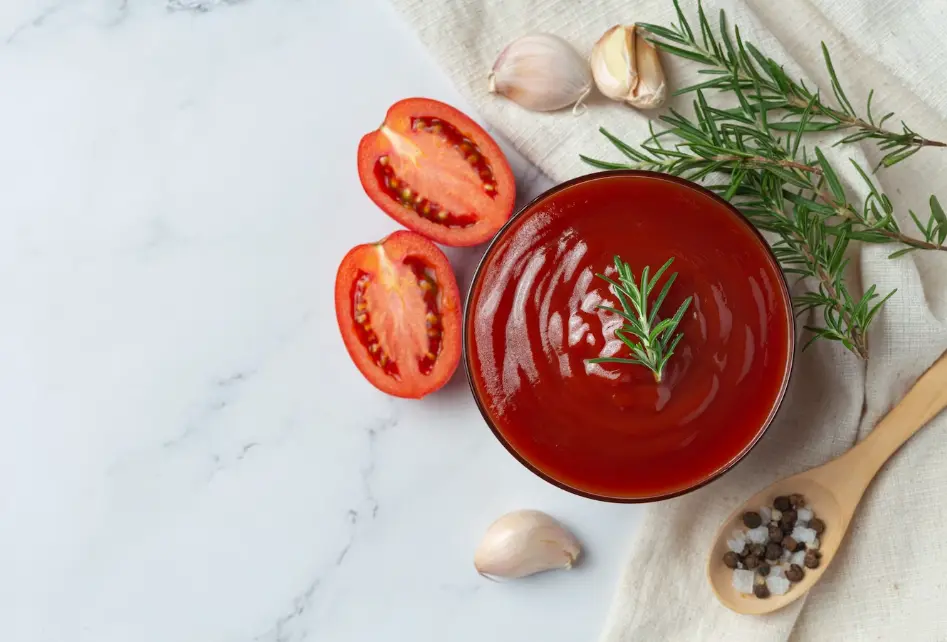
Tomato sauce is a delectable and versatile condiment that enhances dishes like pasta and pizza. However, commercial options can be pricey and contain unwanted ingredients. Crafting your homemade tomato sauce is a budget-friendly and ingredient-conscious solution.
One effective method to prolong the lifespan of your tomato sauce is to boil it down. This process intensifies the flavors and thickens the sauce, allowing for extended storage in the refrigerator or freezer, up to 3 months.
To achieve this, simply simmer your tomato sauce over low heat until it reduces by approximately half. Remember to stir it frequently to prevent sticking.
After the reduction, let the sauce cool completely before transferring it to storage. You can then use it in recipes just like any other tomato sauce.
Delicious Homemade Tomato Sauce Recipe
Here’s everything you need for a scrumptious homemade tomato sauce:
Ingredients:
- 2-3 kg ripe tomatoes
- 3 cloves of garlic
- 1 bunch of mixed herbs (e.g., oregano, basil, thyme)
- 2 tsp salt
- 1 tablespoon of sugar
- A pinch of pepper
- A splash of red or white wine
- Some olive oil
Instructions:
Start by washing the tomatoes, removing the stems, and cutting them into small cubes. Finely chop the garlic and herbs.
Heat a drizzle of olive oil in a saucepan over medium heat. Add the chopped garlic and sauté for about 1 minute until fragrant.
Add the cubed tomatoes, wine, chopped herbs, salt, pepper, and sugar to the saucepan. Bring the mixture to a boil, then reduce the heat to low and let it simmer for at least 30 minutes, or up to 2 hours. Stir occasionally during this time.
If you prefer a smoother consistency, use an immersion blender or a food processor to puree the sauce.
Allow the sauce to cool completely before transferring it to an airtight container. You can store it in the refrigerator or freezer for later use. Enjoy your homemade tomato sauce on pasta, pizza, and more!
Ensuring Long-lasting Preservation Airtight Sealing for Your Tomato Sauce
To guarantee your tomato sauce stays fresh and free from unwanted surprises upon opening, achieving an airtight seal on the jars is crucial. This method prevents air from infiltrating and compromising the sauce’s quality. A reliable approach for preserving sauce in jars involves the use of a vacuum sealer in combination with a compatible bell jar.
Step 1: Begin by ensuring the jars are impeccably clean and sterilized. A recommended method is to thoroughly rinse them with boiling water before filling. The Lava bell jar is compatible with various twist-off jars with 8 to 9 cm screw caps, as well as two-part aluminum lid preserving jars with a maximum lid diameter of 8.5 cm.
Step 2: Carefully pour the sauce into the mason jars, making sure not to spill on the rim. To facilitate the creation of a vacuum later, leave a small amount of space at the top—avoid filling the jars to the brim.
Step 3: Allow the sauce to cool within the jars until it reaches a hand-warm temperature. Then, place the lid on the jar and tighten it until you feel resistance. When using jars with two-part aluminum lids, initially secure the lid without the ring.
Step 4: Now, position the vacuum bell over the lid, set the vacuum sealer to “Container,” and it will automatically create a vacuum within the jar. You might hear a slight cracking sound from the lid as the vacuum forms. Once this occurs, remove the bell. If you’re using a two-part aluminum lid, reattach the ring to successfully achieve an airtight seal.
By following this method, your tomato sauce can remain perfectly preserved in an airtight container for up to a year.
Lava Suggestion: In cases where the lid size of your chosen jar doesn’t allow for vacuum sealing with the vacuum bell, no need to worry—Lava offers a range of vacuum containers in various sizes for this purpose. Simply fill the jar with sauce, secure the lid, and place it inside the vacuum container. Connect the vacuum device to the container using the provided suction device, set the toggle switch to “Container,” and effortlessly create a vacuum within the container.